
Introduction
What is Weight Gain?
Weight gain occurs when the body accumulates excess energy in the form of fat, muscle, or fluid, increasing overall body mass. From a medical perspective, weight gain happens when caloric intake consistently exceeds caloric expenditure over time.
This comprehensive guide walks you through everything from understanding how your body stores excess energy and recognizing concerning weight patterns to exploring the latest medical classifications, evidence-based natural treatments, medical interventions, and debunking common weight loss myths.

Get Your Ultimate Fat Loss Guide
The Science of Gaining Weight
At its core, weight gain is about the balance of energy, but it is influenced by several complex biological factors:
| Factor | Role in Weight Gain |
|---|---|
| Caloric Intake | Consuming more calories than your body requires for its daily functions and activities results in the excess being stored. |
| Caloric Expenditure | A sedentary lifestyle or low physical activity means your body burns fewer calories. |
| Hormonal Influence | Hormones such as insulin play a key role in signaling the body to store fat. |
| Genetic Predisposition | An individual’s genetic makeup can affect their metabolic rate, influencing how quickly they burn energy. |
How the Body Manages Extra Energy
When you take in more calories than you immediately need, your body stores this excess energy through a multi-step process:
Immediate Use
For the first 24 hours, any extra calories are used to power your current activities.
Glycogen Conversion
The next step involves converting the surplus energy into glycogen, which is then stored in the muscles and liver for short-term access.
Fat Storage
Finally, any remaining energy is transformed into adipose tissue, or body fat, for long-term storage.
Fat typically accumulates around the abdomen, hips, thighs, and arms. To better understand how fat accumulates in the body, watch the video below.
Video Credits: Dr. Wealz
Distinguishing Normal Fluctuations from Concerning Weight Gain
How much does your weight fluctuate throughout the day?
- Daily changes of 1-2 pounds due to food, water, and waste.
- Fluctuations of 2-5 pounds during the menstrual cycle.
- Seasonal shifts of 3-7 pounds.
When to be Concerned:
- Consistently gaining more than 2 pounds per week.
- Rapid weight gain (5+ pounds in one week) without dietary changes
- Weight gain accompanied by swelling, breathing difficulties, or fatigue
What are the Different types of Weight Gain?
Understanding different types of weight gain helps you choose the accurate approach for your situation. Weight gain is classified in several ways, from traditional medical standards to the latest research findings.
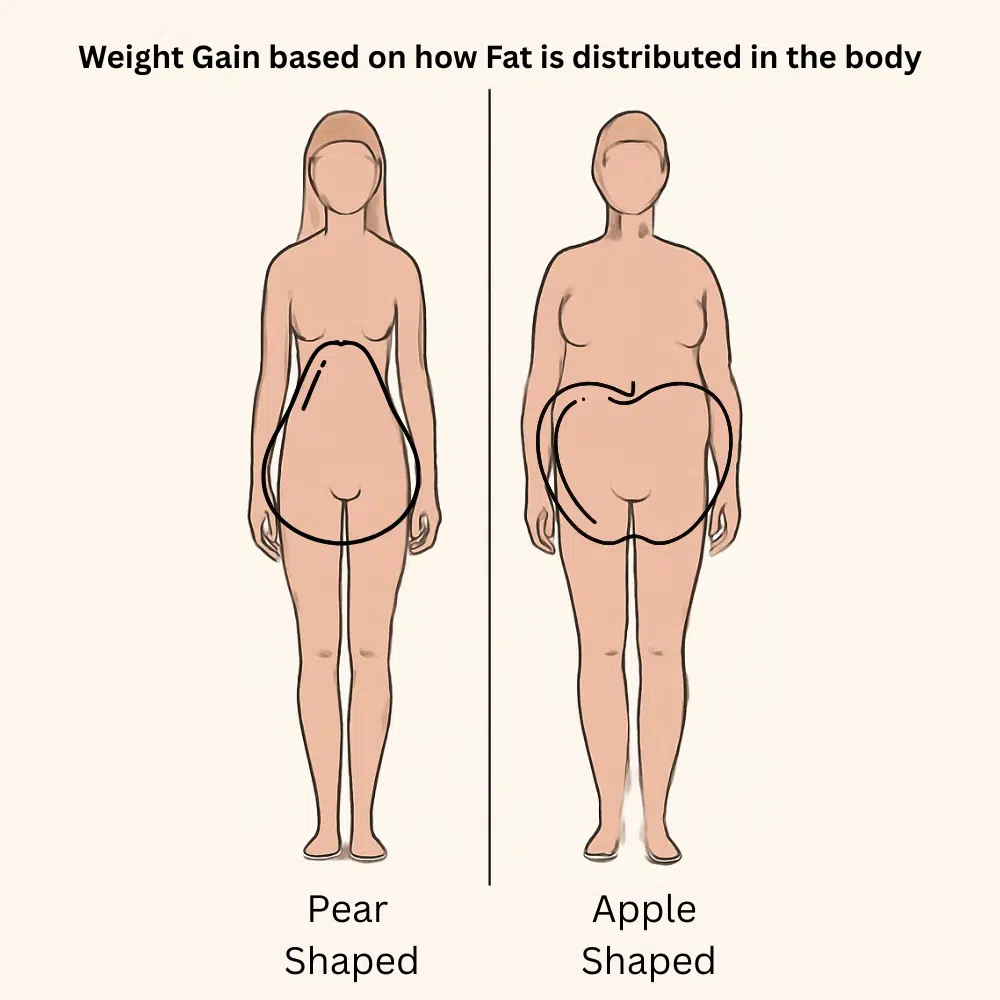
1. Based on how Fat is Distributed in the Body
Where your body stores fat can be an indicator of potential health risks. Here’s a comparison of common body types.
| Body Type | Fat Storage Pattern | Health Risk Level | Common in |
|---|---|---|---|
| Apple Shape | Belly, chest, upper body | Higher risk | Men, post-menopausal women |
| Pear Shape | Hips, thighs, buttocks | Lower risk | Pre-menopausal women |
2. WHO BMI Classification: The Traditional Gold Standard
The World Health Organization created the most widely used system for classifying weight categories. Healthcare providers all around the world still use this method to diagnose weight-related conditions.
The Complete Guide to BMI
| Weight Category | BMI Range (kg/m²) | Health Risk Level |
|---|---|---|
| Underweight | Below 18.5 | Low (but other health risks are possible) |
| Normal Weight | 18.5 – 24.9 | Average risk |
| Overweight | 25.0 – 29.9 | Slightly increased risk |
| Obesity Class I | 30.0 – 34.9 | Moderate risk |
| Obesity Class II | 35.0 – 39.9 | High risk |
| Obesity Class III | 40.0 and above | Very high risk |
Major Limitations of BMI Classification
While BMI remains popular in medical settings, it has several serious flaws when classifying weight gain accurately:
Body Composition Problems
Cannot tell the difference between muscle and fat. Individuals with significant muscle development, such as athletes, are frequently miscategorized as overweight or obese by BMI standards. People who have low muscle mass may appear of normal weight despite having excess fat.
Fat Distribution Issues
Ignores where fat is stored on your body. Fat stored in the abdominal area is associated with greater health risks compared to fat located on the hips or thighs. Two people with identical BMI can have completely different health risks.
Demographic Limitations
Uses the same standards for all ethnic groups. Asian populations face health risks at lower BMI levels. Older adults need different standards from younger people.
Individual Health Status
Does not consider current health conditions. A person with a BMI of 31 might be perfectly healthy. Someone with a BMI of 28 could have serious weight-related health problems.
Real-World Example:
A bodybuilder with 8% body fat might have a BMI of 32, technically placing them in the “obese” category, while a sedentary person with 35% body fat could have a BMI of 24, appearing “normal.”
3. Latest Obesity Classification
Medical experts recognized these BMI limitations and created a revolutionary new system. In January 2025, The Lancet Commission on Clinical Obesity published groundbreaking research that changes how we classify weight-related health issues. Now the types of Obesity are:
The New Two-Category System
This advanced classification moves beyond simple weight measurements to focus on actual health impact.
Preclinical Obesity
People with excess body fat who show no signs of organ problems or health complications related to their weight.
Key Features:
- Excess fat is present, but causes no current health issues.
- Organs function normally.
- Daily activities remain unaffected.
- No weight-related symptoms.
Management Approach:
- Focus on prevention rather than treatment.
- Lifestyle changes through diet and exercise.
- Regular health monitoring.
- Education and counseling to prevent progression.
Clinical Obesity
People with excess body fat that has caused measurable organ dysfunction, health problems, or significant limitations in daily life.
Key Features:
- Objective signs of reduced organ function.
- Health complications are directly linked to body fat.
- Daily activities become difficult or limited.
- Measurable symptoms present.
Management Approach:
- Active treatment to reverse organ problems.
- Personalized intervention plans.
- May include lifestyle changes, medications, or surgery.
- Success is measured by health improvement.
Why the 2025 Classification Works Better
Focuses on Health, Not Numbers
Evaluates the impact of excess weight on bodily functions instead of depending solely on mathematical calculations.
Prevents Unnecessary Treatment
People with excess weight but good health avoid aggressive medical interventions that they do not need.
Guides Better Treatment Decisions
Healthcare providers can match treatments to actual health problems rather than BMI categories.
Recognizes Individual Differences
Two people with the same BMI might need completely different approaches based on their health status.
Example Comparison:
Person A: BMI 32, no health problems, exercises regularly → Preclinical obesity, focus on prevention.
Person B: BMI 29, has joint pain and sleep apnea from weight gain → Clinical obesity, needs treatment.
Confused About Which Type of Weight Gain Do You Have?
What are the Statistics of Weight Gain?
Weight gain is one of the world’s largest health issues, expanding swiftly throughout nations and demographics worldwide.
Source: WHO
How Common Is Obesity Today?
890 Million
Adults with obesity
1 in 8 people worldwide
2.5 Billion
Adults overweight or obese
43% of all adults
390 Million
Children (ages 5-19)
20% of this age group
What is the Prevalance of Obesity?
How Fast Is It Growing?
- Adult obesity has doubled since 1990.
- Childhood obesity levels have multiplied 4 times in the same period.
- Projections indicate 1 billion people will be affected by 2030.
Regional Impact
- Americas: 67% of adults are overweight or obese.
- United States: Over 40% of the adult population is impacted.
- Europe: Over 60% in many countries.
- Asia and Africa: Fastest-growing rates.
Future Projections for 2030
It is projected that obesity will affect 1 in every 5 women and 1 in every 7 men.
2.7 billion adults could be overweight or obese.
What causes Weight Gain?
Weight gain occurs for many different reasons. Understanding what causes weight gain helps you select the ideal approach to manage it. Some of the common reasons for weight gain are:
1. Common Lifestyle Causes
Poor Diet and Overeating
Eating more calories than your body burns is the most common cause of weight gain:
- High-calorie processed foods and sugary drinks
- Large portion sizes and frequent snacking
- Late-night eating when your body burns calories more slowly
Physical Inactivity
A sedentary lifestyle results in your body burning fewer calories, causing weight gain. The current lifestyle has reduced people’s activity levels as it has become convenient to do anything and everything from home without going out.
Sleep and Stress Issues
- Lack of sleep interferes with hormones that control hunger, leading to increased appetite.
- Long-term stress causes cortisol hormone levels to rise, resulting in greater abdominal fat retention. This commonly results in love handles forming around the waist.
- Emotional eating leads to the consumption of high-calorie comfort foods.
Age-Related Changes
- Muscle mass decreases after middle age, slowing metabolism
- Activity levels often drop with age
- Hormonal changes affect weight distribution
2. Endocrine and Metabolic Disorders
| Condition | How It Causes Weight Gain |
|---|---|
| Hypothyroidism | An underactive thyroid slows metabolism, reducing calorie burning. |
| PCOS (Polycystic Ovary Syndrome) | An increase in androgens causes excess weight gain in women of reproductive age. This condition commonly causes fat storage around the hips and waist, creating love handles. |
| Cushing’s Syndrome | Too much cortisol hormone causes fat accumulation, especially around the face and midsection. This often results in prominent love handles and increased waist circumference. |
| Diabetes | High blood sugar and decreased insulin sensitivity cause weight gain, especially in the abdomen. This abdominal weight gain frequently includes love handles around the waist. |
| Menopause | Reduced levels of estrogen and progesterone during menopause can contribute to weight gain and cause fat to be stored differently in the body. This hormonal shift particularly promotes love handle formation around the waist and hips. |
3. Chronic Medical Conditions
Other Conditions That Can Cause Weight Gain
Mental Health Conditions
-
Depression:
Affects appetite and energy levels, often leading to emotional eating.
-
Eating Disorders:
Like binge-eating disorder, involve cycles of overeating.
Other Medical Conditions
-
Sleep apnea:
Interferes with normal sleep patterns, which can disrupt hormones that control hunger and regulate the body’s metabolism.
-
Arthritis:
Leads to reduced physical activity due to joint pain and stiffness.
-
Preeclampsia:
A complication that can occur during pregnancy, leads to swift fluid retention and an increase in weight.
4. Medications That Cause Weight Gain
Gaining weight can be a side effect of numerous commonly prescribed medications:
- Antidepressants and antipsychotics
- Corticosteroids (such as prednisone) result in fluid buildup and greater appetite.
- Birth control pills – hormonal changes affect weight.
- Diabetes medications, including insulin
- Beta blockers for blood pressure
What Happens When You Don’t Lose Weight?
Being overweight or obese can result in severe health problems and substantial financial burdens. This is how obesity affects both your health and your finances.
Health Conditions Caused by Weight Gain
| Health Condition | How Weight Gain Causes It |
|---|---|
| Type 2 Diabetes | Fat cells, especially around your belly, release inflammatory chemicals that block insulin from moving sugar into cells. In response, the pancreas must work harder to generate more insulin, eventually becoming overworked and unable to supply the amount the body requires. |
| Heart Disease | Extra body tissue requires 30% more blood supply, forcing your heart to pump harder constantly. Obesity also increases bad cholesterol, which can accumulate on the inner walls of the arteries (a condition known as atherosclerosis), eventually blocking blood flow to your heart. |
| High Blood Pressure | The heart has to pump with more force to get blood to the additional body tissue, and the extra weight can make blood vessels less elastic. The fat surrounding your organs can release chemicals that harm the walls of your blood vessels and make it more difficult for blood to circulate. |
| Sleep Apnea | When fatty tissue accumulates around the neck, tongue, and throat, it can expand and put pressure on the airways while you sleep. This blocks airflow and leading to repeated pauses in breathing, which can happen numerous times each night. |
| Stroke | Inflammation caused by obesity makes blood clots more probable, and it also elevates blood pressure and cholesterol. These clots can travel to your brain and block blood vessels, cutting off oxygen to brain tissue. |
| Arthritis | Each extra pound you carry puts an additional four pounds of strain on your knees with every step. This constant overload wears down protective cartilage to wear down more quickly, and inflammatory substances from fat cells can circulate in the blood and harm joint tissue. |
| Cancer | Fat tissue acts like a hormone factory, producing excess estrogen and other growth factors that fuel certain cancers like breast, colon, kidney, and pancreatic cancer. Chronic inflammation from obesity also damages cellular DNA and impairs the immune system’s capacity to eliminate irregular cells. |
| Fatty Liver Disease | When you eat more calories than needed, excess calories are transformed into fat that is then stored within liver cells. This fat buildup triggers inflammation and scarring that prevents your liver from filtering toxins and processing nutrients optimally. |
| Depression | Fat tissue produces inflammatory chemicals called cytokines that travel to your brain and interfere with mood-regulating neurotransmitters. The social prejudice, physical constraints, and health concerns associated with obesity can also lead to ongoing feelings of sadness and despair. |
| Kidney Disease | The elevated blood pressure associated with obesity can harm the fragile blood vessels in the kidneys, while diabetes from excess weight causes sugar to build up and harm the kidney filtering units. Both conditions force the kidneys to work harder until they eventually fail. |
| Heart Failure | Your heart muscle thickens and weakens from years of pumping against high pressure and increased demand. Sleep apnea from excess weight also reduces oxygen delivery to heart tissue, while fluid retention strains the heart’s ability to pump effectively. |
| Gallbladder Disease | Obesity causes your liver to produce excess cholesterol, which can crystallize and form painful gallstones. Rapid weight loss can also trigger gallstone formation by releasing stored cholesterol from fat tissue into bile. |
Financial Cost of Obesity-Related Conditions
| Weight Category | Annual Healthcare Cost Increase |
|---|---|
| Normal Weight | Baseline (0% increase) |
| Overweight | Moderate increase |
| Class I Obesity (BMI 30-34.9) | 68.4% increase in annual medical costs |
| Class II Obesity (BMI 35-39.9) | 120.0% increase in annual medical costs |
| Class III Obesity (BMI 40+) | 233.6% increase in annual medical costs |
Why Can’t You Lose Weight? Take Our Assessment
How to Diagnose Obesity and Overweight?
Diagnosing obesity involves measuring your body size and checking for health problems related to excess weight. Healthcare providers use several simple tests to determine if you have obesity and assess your health risks.
How to confirm obesity?
Basic Measurements for Obesity Diagnosis
-
Physical Examination:
Your doctor measures height, weight, and waist circumference during a routine visit. These basic measurements can diagnose obesity in most cases.
-
Body Mass Index (BMI):
The most common diagnostic tool calculates BMI using your height and weight with the formula: weight (kg) ÷ height (m²).
Official BMI Categories:
- Normal Weight: 18.5-24.9 kg/m²
- Overweight: 25.0-29.9 kg/m²
- Obesity Class I: 30.0-34.9 kg/m²
- Obesity Class II: 35.0-39.9 kg/m²
- Obesity Class III: 40.0+ kg/m²
-
Additional Body Measurements:
- Waist Circumference: Abdominal obesity increases health risks when the waist measurement exceeds 102 cm (40 inches) in men or 89 cm (35 inches) in women.
- Waist-to-Hip Ratio: Measures fat distribution patterns.
- Body Fat Percentage: More accurate than BMI for assessing actual fat content.
-
Blood Tests:
Healthcare providers check for obesity-related health problems like blood sugar levels, cholesterol, thyroid function, and liver function.
Advanced Testing When Needed
-
DEXA Scan:
Most accurate body fat measurement available.
-
CT or MRI Scans:
Detailed analysis of fat distribution.
-
Blood Pressure Monitoring:
Checks for hypertension.
-
Sleep Studies:
Identifies sleep apnea.
Latest Diagnostic Approach
The latest medical guidelines recommend looking beyond BMI numbers to assess:
- Whether excess weight causes actual health problems.
- How weight affects your daily activities.
- Organ function and metabolic health.
Preclinical vs Clinical Obesity:
Preclinical Obesity: You have excess body fat but no health problems yet.
Clinical Obesity: Excess weight is causing measurable health issues or limiting daily activities.
What is the best test for obesity?
For most people, combining BMI calculation with waist measurement and basic blood tests provides an accurate diagnosis. DEXA scans offer the most precise results but aren’t necessary for routine diagnosis.
What is the Best Fat Loss Meal Plan?
There’s no single “best diet” that works for everyone. The most effective diet for losing weight is one that addresses your specific causes of weight gain while being sustainable in the long run.
Diet Plans Based on Weight Gain Causes
What Foods make You Fat?
- Sugary drinks and fruit juices
- Processed snacks and packaged foods
- Restaurant meals with hidden fats and sugars
- Large portions of healthy foods (nuts, avocados)
- Late-night eating, regardless of food type
How to Create Your Personalized Weight Loss Diet Plan
Get the Meal Plan That Actually Works For Weight Loss
What are Effective Exercises for Weight Loss?
The right exercise approach can significantly accelerate your fat loss journey. Here’s what works based on current research and practical application.

High-Intensity Interval Training (HIIT) – The Top Fat Burner
HIIT is the most effective exercise method for weight loss because it creates what scientists call the “afterburn effect.”
- Work for 40 seconds, then rest for 20 seconds
- Your body keeps burning extra calories for up to 24 hours after you finish
- HIIT delivers superior caloric expenditure, exceeding traditional cardio by approximately one-quarter to one-third in equivalent timeframes
- Get maximum results in just 15-25 minutes
- Effective exercises include burpees, rapid knee lifts, squat jumps, and explosive jacks

Compound Strength Training – Build Your Calorie-Burning Engine
Resistance exercises targeting multiple muscle groups at once are highly effective for weight loss.
- Squats strengthen your legs, glutes, and core together
- Push-ups work your chest, shoulders, triceps, and core muscles together
- Rows strengthen your back, biceps, and core
- Lunges work your leg muscles, glutes, and help with balance
- Each pound of muscle you add burns about 6 calories daily while you rest

Steady-State Cardio – The Reliable Fat Burner
Traditional cardio still plays an important role in weight loss.
- Running or jogging can burn 300-600 calories in 30 minutes
- Bike riding burns 300-500 calories in 30 minutes, depending on speed
- Swimming can burn 300-500 calories within 30 minutes
- Brisk walking provides a low-impact daily option
- Do steady cardio on days when you’re not doing HIIT to keep burning calories
Simple 7-Day Exercise Plan
This weekly plan balances high-intensity fat burning with muscle building and proper recovery. Each workout takes about 30 minutes.
| Day | Workout Type | Focus | Details |
|---|---|---|---|
| Monday | HIIT | Full-Body Blast | Warm-up: 5 min gentle movements Main: 8 rounds of 40s work/20s rest • Burpees • Mountain climbers • Jump squats • High knees (repeat twice) Cool-down: 5 min stretching |
| Tuesday | Strength A | Muscle Building | 3 rounds, 12 reps each: • Squats • Push-ups • Dumbbell rows • Plank hold (30s) |
| Wednesday | Cardio | Active Recovery | Choose one (30 min): • Easy jog • Moderate bike ride • Swimming |
| Thursday | HIIT | Core Focus | 10 intervals of 30s work/30s rest: • High knees • Bicycle crunches • Medicine ball slams • Russian twists (repeat 2.5x) |
| Friday | Strength B | Balance & Core | 3 rounds, 12 reps each: • Lunges (12 each leg) • Shoulder press • Dead bugs (12 each side) • Side planks (30s each) |
| Saturday | Active Recovery | Low Intensity | 45 minutes: • Brisk walk • Easy swim • Gentle bike ride |
| Sunday | Rest | Recovery | • Light stretching (20 min) • Foam rolling (10 min) • Meal prep |
Updated Exercise Guidelines: Previous advice recommended 150 minutes of moderate activity per week for general health. New recommendations for weight loss suggest 300 minutes of moderate activity OR 150 minutes of vigorous activity per week (Source: WHO). In practical terms, this means 5 hours of brisk walking per week, or 2.5 hours of running/HIIT
What are the Best Weight Loss Supplements?
Bottom Line Up Front: Research shows most weight loss supplements lack strong scientific backing. Only four supplements demonstrate significant fat loss results (2-4.5 kg in 12 weeks). These work best alongside healthy eating and regular exercise.
Pills That Work for Fat Loss
Based on the latest clinical research from 2025, these four supplements have strong evidence for meaningful weight loss:
Sources: NIH Office of Dietary Supplements 2025, Scientific Reports 2024, Clinical Nutrition ESPEN 2020
| Supplement | Weight Loss | Dosage | Mechanism | Evidence Level | Safety Profile |
|---|---|---|---|---|---|
| White Kidney Bean Extract | 2.6-4.5 kg over 12 weeks | 700-1000mg 3x daily before meals | Blocks starch digestion by inhibiting alpha-amylase enzyme | Strong (2024 RCT, multiple trials) | Well tolerated, minor digestive effects |
| Green Tea Extract (EGCG) | 1-2.5 kg over 12 weeks | 300-500mg daily | Increases fat oxidation, inhibits ghrelin hormone | Strong (Multiple 2024 meta-analyses) | Generally safe, avoid on empty stomach |
| L-Carnitine | 1.2 kg more than placebo | 1-2g daily with meals | Transports fatty acids into mitochondria for energy | Strong (37 trials, 2,292 participants) | Well tolerated up to 4g daily |
| Caffeine | Prevents 0.4 kg gain annually | 100-400mg daily | Increases thermogenesis and energy expenditure | Moderate (Long-term observational data) | Safe under 400mg/day for adults |
Natural Fat Burners: Evidence-Based Options
1. Capsaicin (Chili Peppers)
- Effect: Reduces energy intake by 74 kcal per meal on average
- Dosage: 2-4mg daily with meals
- Mechanism: Increases energy expenditure and satiety
- Sources: Cayenne pepper supplements, chili extract
2. Forskolin (Coleus forskohlii)
- Effect: May reduce body fat by 4% vs 1% placebo
- Dosage: 250mg twice daily (10% forskolin extract)
- Mechanism: May activate cAMP and promote fat breakdown
- Note: Limited human research available
3. Bitter Orange Extract (Synephrine)
- Effect: Speeds up metabolism and enhances the calorie-burning ability of the body.
- Dosage: 10-30mg daily
- Mechanism: Stimulates beta-3 receptors for fat burning
- Caution: Can raise blood pressure; avoid with stimulants
4. Yohimbine HCl
- Effect: May enhance fat loss during fasting
- Dosage: 0.2mg per kg body weight
- Mechanism: Blocks alpha-2 receptors that inhibit fat breakdown
- Caution: Can cause anxiety, so use with medical supervision
Which Weight Loss Supplements Are Right for You?
Weight gain has different root causes, so choose weight loss pills based on your primary issue:
Your Complete Weight Loss Supplement Guide
High Carbohydrate Intake
Primary Issue: Eating bread, pasta, rice, or high-starch foods
- Morning: Green Tea Extract 300mg
- Take 30 minutes pre-meal: White Kidney Bean 700-1000mg + Chromium 200mcg
Stress & Emotional Eating
Primary Issue: Stress eating, cortisol belly, poor sleep
- Morning: Ashwagandha 300mg
- Daily: Omega-3 1-2g
- Evening: Magnesium 200-400mg + Rhodiola 200mg
Blood Sugar Issues
Primary Issue: Cravings, energy crashes, pre-diabetes
- Take 30 minutes pre-meal: Chromium 200mcg + White Kidney Bean 700mg
- Between Meals: Cinnamon Extract 500mg
- Daily: Alpha-Lipoic Acid 300mg + Berberine 500mg
Hormonal Imbalances
Primary Issue: PCOS, menopause, thyroid issues
- Morning: Selenium 200mcg + Iodine 150mcg
- Throughout day: Omega-3 2g + Vitamin D3 2000 IU
- Evening: Magnesium 400mg + Zinc 15-30mg
Water Retention & Bloating
Primary Issue: Feeling puffy, clothes tight, digestive issues
- Morning: Dandelion Extract 500mg + Potassium 99mg
- At mealtime: Digestive Enzymes
- Daily: Probiotics 10+ billion CFU + Magnesium 200mg
📋 Universal Foundation (Everyone should include)
| Supplement | Dosage | Purpose |
|---|---|---|
| Multivitamin | 1 daily | Fill nutritional gaps |
| Omega-3 EPA/DHA | 1-2g daily | Reduce inflammation |
| Vitamin D3 | 2000 IU daily | Helps optimize fat burning |
| Magnesium | 200-400mg daily | Better energy & sleep |
| Protein Powder | 25-30g daily | Preserve muscle |
⚠️ Important Guidelines
- Start with 1-2 categories that match your primary issue
- Add Universal Foundation supplements for everyone
- Wait 2 weeks before adding more supplements
- Take breaks from stimulants (caffeine, tyrosine) every 6-8 weeks
- Monitor blood pressure with any stimulant-based supplements
- Always consult your doctor before beginning any supplement
Get A Customized Supplement Plan For Your Journey To Lose Weight
FDA-Approved Weight Loss Prescription
Bottom Line Up Front: These six FDA-approved ft loss prescription medicines have shown significant weight reduction results (5-20% total body weight loss). These treatments require medical oversight and are prescribed exclusively for individuals with a BMI ≥30 or a BMI ≥27 plus obesity-related health conditions.
All six FDA-approved medications below have strong clinical evidence and are approved for long-term use. Most work by controlling your body’s hunger and fullness signals – particularly decreasing ghrelin (your body’s “hungry” signal) and working like your natural satiety hormones that tell your brain you’re satisfied.
| Medication | Rank | Weight Loss | Best For | How It Works | Common Side Effects |
|---|---|---|---|---|---|
| Zepbound (Tirzepatide) | #1 | Up to 20% body weight | Highest weight loss | Works on two different hunger control systems in your body, helping you feel satisfied faster and stay satisfied longer between meals | Nausea, vomiting, diarrhea |
| Wegovy (Semaglutide) | #2 | Average 14.9% body weight | Heart disease | Works like your body’s satiety hormone to delay stomach emptying and decrease hunger hormone production | Nausea, stomach pain, constipation |
| Saxenda (Liraglutide) | #3 | Up to 9% body weight | Daily injection | Works like your body’s natural satiety hormone to help you feel satisfied with smaller meals and reduces hunger signals from your brain | Nausea, low blood sugar, headache |
| Qsymia (Phentermine/Topiramate) | #4 | 5-10% body weight | Pill form, migraines | Combines appetite suppressant (phentermine) with seizure medication that also reduces food cravings and makes food taste less appealing | Dry mouth, constipation, dizziness |
| Contrave (Naltrexone/Bupropion) | #5 | 5-8% body weight | Can’t take stimulants | Blocks pleasure signals from food in your brain while boosting chemicals that control appetite and cravings | Nausea, constipation, headache |
| Orlistat (Xenical/Alli) | #6 | 5-6% body weight | Budget-friendly | Prevents your digestive system from processing fat, allowing about 30% of consumed fat to pass through your body unprocessed | Oily stools, gas, stomach upset |
Sources: FDA Drug Database 2025, NIDDK Clinical Guidelines, Obesity Medicine Association
Who Qualifies for Obesity Medication?
Prescription Criteria
BMI of 30+ (Obesity) – Qualifies for all FDA-approved weight loss medications
BMI of 27+ (Overweight) combined with at least one of these conditions related to obesity:
- Diabetes (Type 2)
- Elevated blood pressure
- Elevated cholesterol levels
- Sleep apnea
- Cardiovascular disease
Age Criteria
Adults: All medications available for ages 18 and older
For teenagers (12+ years): Total of 4 medications are approved for this age category:
- Wegovy
- Saxenda
- Qsymia
- Orlistat
Weight Loss Injections: Most Effective Option
Injectable medications are currently the most effective prescription treatments available, showing 2-3 times more weight loss than oral medications.
| Injection | Weight Loss | Effectiveness | Frequency | Best For |
|---|---|---|---|---|
| Zepbound (Tirzepatide) | Up to 20% body weight | Most effective – 22.5% in some studies | Once weekly | Maximum weight loss |
| Wegovy (Semaglutide) | Average 14.9% body weight | Highly effective – 83% achieve 5%+ weight loss | Once weekly | Heart disease patients |
| Saxenda (Liraglutide) | Up to 9% body weight | Moderately effective – 63% achieve 5%+ weight loss | Once daily | Daily routine preference |
What are the Different Weight Loss Surgeries?
Fat loss surgery can be life-changing for people with severe obesity.
Source: DukeHealth
Weight Loss Surgery Requirements
No additional conditions needed
QualifiesMust have serious obesity-related health problems
QualifiesType 2 diabetes that’s hard to control
May QualifyQualifying Health Conditions
- Type 2 diabetes
- High blood pressure
- Sleep apnea
- Heart disease
- High cholesterol
- Gallbladder disease
Mandatory Checklist
- Tried diet and exercise without long-term success
- Pass medical screening tests for surgery safety
- No active substance abuse (tobacco, drugs, excessive alcohol)
- Complete psychological evaluation
- Understand surgical risks and commit to lifestyle changes
- Age 18+ (teens may qualify with BMI ≥ 35 plus serious health conditions)
Types of Weight Loss Surgery
Source: NIDDK
| Surgery Type | How It Works | Weight Loss Results | Recovery Time | Approximate Cost | Key Features | Best For |
|---|---|---|---|---|---|---|
| Gastric Sleeve (Sleeve Gastrectomy) | Removes 80% of stomach, leaving banana-shaped tube | 60-70% excess weight lost in 12-18 months | 2-3 weeks full recovery, 4 weeks liquid diet | $15,000-$23,000 | • Most common procedure • Cannot be reversed • Reduces hunger hormones • Lower complication risk |
Simple procedure, NSAID users, gradual weight loss preference |
| Gastric Bypass (Roux-en-Y) | Creates small stomach pouch, reroutes small intestine | 70% excess weight lost, rapid loss in first 6 months | 4-6 weeks full recovery, 2 weeks liquid diet | $17,000-$26,000 | • More complex procedure • Bypasses nutrient absorption • Difficult to reverse • Higher nutritional monitoring needed |
Severe diabetes, faster weight loss, acid reflux patients |
| Adjustable Gastric Band (Lap-Band) | Inflatable band around top of stomach creates small pouch | Less weight loss than other procedures | Shorter recovery, outpatient procedure | $10,000-$18,000 | • Adjustable and reversible • Declining popularity • Higher complication rates • Requires regular adjustments |
Rarely performed today at major centers |
| Duodenal Switch (BPD-DS) | Sleeve gastrectomy + bypasses 75% of small intestine | 80% excess weight lost, most effective procedure | Longer recovery due to complexity | $20,000-$30,000 | • Highest weight loss potential • Best for diabetes reversal • Highest nutritional risk • Most complex procedure |
Highest BMI patients, severe diabetes, when maximum weight loss needed. |
Weight Loss Myth Busters: Evidence-Based Facts
Online fat loss advice frequently makes unrealistic promises. Many claims lack proper scientific backing. Here’s what research demonstrates about successful weight management.
Myth: All Calories Have the Same Effect
Myth: Selecting Specific Areas for Fat Loss is Possible
Myth: Missing Meals Speeds Up Weight Loss
Myth: All Fats Should Be Avoided
Myth: Carbohydrates Always Cause Weight Gain
Myth: Weight Loss Supplements Work Fast
Myth: You Can Boost Metabolism Dramatically
Myth: Weight Loss Is Only About Willpower
Professional Recommendations
Effective weight management needs a complete approach. Combine good nutrition with regular exercise and healthy habits. Focus on changes you can maintain long-term. Avoid programs that promise unrealistic results quickly.
Get The Ultimate Customized Solution For Losing Weight All In One Place
FAQs: Your Common Questions Answered Here
BMI = (Weight in pounds × 703) ÷ (Height in inches squared)
BMI ranges are:
Underweight Below: 18.5
Normal Weight: 18.5 – 24.9
Overweight: 25.0 – 29.9
Obesity Class I: 30.0 – 34.9
Obesity Class II: 35.0 – 39.9
Obesity Class III: 40.0 and above
2. Eat protein with every meal – Helps build and maintain muscle.
3. Drink plenty of water – Keeps your body working well.
4. Get good sleep – Your body needs rest to function properly.
5. Consider hormone testing – A doctor can check if your hormones need help.
6. Know the facts – Metabolism slows 2-5% per decade after 30, but strength training 2-3 times weekly can counter this decline.
2. Rapid weight gain (5+ pounds in one week) without dietary changes
3. Weight gain accompanied by swelling, breathing difficulties, or fatigue.
4. Other signs to watch for include hair loss, irregular periods, thyroid dysfunction, or trouble losing weight despite healthy habits.
Recovery takes 2-3 weeks.
Gastric bypass surgery: Forms a small stomach pouch
Recovery takes 4-6 weeks.
Helps you lose weight faster at first
Long-term results: Both surgeries work equally well over time
1. Gastric sleeve
2. Gastric bypass
3. Gastric band
4. Duodenal switch: Only for people with a very high BMI, and is performed when maximum weight loss is needed
Important Note: Each surgery has a different recovery period and different results.
1. Eating too much – Consuming calorie-dense foods like processed foods.
2. Inactive lifestyle – Inactive daily routines and inadequate physical movement
3. Genetics – Family background and genetics play an important role.
1. Hard to breathe
2. Joint pain
3. Always feeling tired
Sleep and mood issues:
1. Trouble sleeping
2. Low self-esteem
3. Feeling sad or worried
Medical measurement: BMI over 30 means obesity
Other health problems:
1. Sleep apnea (stopping breathing while sleeping)
2. High blood pressure
3. Skin rashes in body folds.