
Introduction
Anxiety is a natural and universal human emotion that serves as a response to stress. An anxiety disorder develops when these feelings of intense fear and distress become overwhelming, persistent, and interfere with daily life. Globally, 359 million people lived with an anxiety disorder in 2021 (Source: WHO). In the U.S., one in five adults experienced significant anxiety symptoms in 2022 (Source: CDC).
Understanding anxiety symptoms and coping mechanisms is empowering. This article explores five proven, science-backed methods for immediate anxiety relief.

Understand Your Anxiety, Not Just Anxiety
Understanding the Mechanism of Anxiety: What Happens in Your Brain?
What happens in your brain when you feel anxiety and stress? It’s a complex interplay of brain regions, neural circuits, and chemical messengers. Understanding this physiological anxiety can help you manage its symptoms.
🚨 The Initial Spark: Amygdala’s Alarm
- The “Fear Center”: Your brain’s amygdala constantly scans for potential danger.
- The Anxious Spark: In anxiety, an overactive amygdala mistakes everyday stress for a major threat, triggering a false alarm.
📈 Body’s Response: The HPA Axis Cascade
- The Alarm’s Effect: That amygdala alarm *immediately activates* the HPA axis, your body’s main stress response system.
- The “Stress” Feeling: This system releases cortisol (the “stress hormone”), flooding your body to increase heart rate and blood pressure—the “fight-or-flight” feeling.
- The Vicious Cycle: Chronic activation from anxiety leaves this system “on,” worsening symptoms and making you feel constantly on edge.
⚖️ Brain’s Control Tower: Prefrontal Cortex
- Managing the Cascade: Your Prefrontal Cortex (PFC) is the “control tower” meant to *calm down* the amygdala and regulate that HPA axis cascade.
- The “Voice of Reason”: It’s your center for rational thinking, helping you realize the threat isn’t actually dangerous.
- Losing Control: In chronic anxiety, the PFC’s connection is weakened. It struggles to “hit the brakes” on the amygdala, letting the fear response run unchecked.
🧪 Chemical Messengers: Neurotransmitter Imbalance
This entire process—from the amygdala’s alarm to the PFC’s control—is governed by these chemical messengers:
- GABA (The “Brake”): This neurotransmitter’s job is to *calm* brain activity. Low levels mean there isn’t enough “brake fluid” in the system, leading to heightened anxiety.
- Serotonin (The “Regulator”): This is crucial for regulating your overall mood. Imbalances make it harder for your brain to manage both the initial fear and its emotional fallout.
Understanding these mechanisms highlights that anxiety is a real, physiological experience, reinforcing the importance of effective coping strategies.
How To Treat Anxiety Instantly: 5 Proven Techniques.
1. Master Your Breath with Diaphragmatic Breathing
Diaphragmatic breathing, or belly breathing, is a powerful technique to counteract the shallow, rapid breathing often seen with nervousness and stress. It provides immediate relief by:
- Activating the parasympathetic nervous system (rest and digest).
- Lowering heart rate and blood pressure.
- Decreasing cortisol, the primary stress hormone (Source: NIH).
How to Practice Diaphragmatic Breathing
- Find a comfortable position, hands on chest and abdomen.
- Inhale slowly through your nose for a count of four, expanding your abdomen.
- Hold breath briefly (1-2 seconds).
- Exhale slowly through your mouth for a count of six, feeling your abdomen fall.
- Repeat for several minutes until calm.
This 1-minute video guides you through diaphragmatic breathing, a powerful technique to quickly calm your nervous system and reduce nervousness
Video Credits: [P]rehab
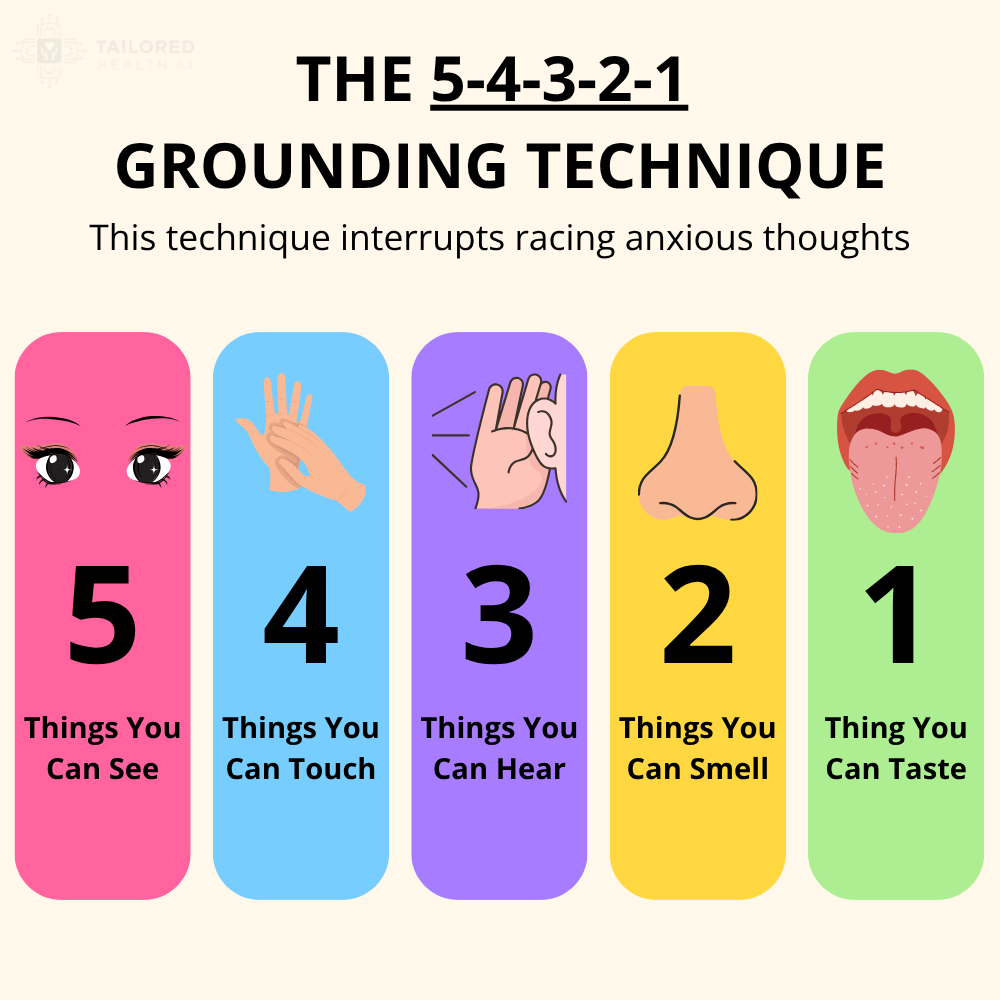
2. Ground Yourself in the Present with the 5-4-3-2-1 Technique
The 5-4-3-2-1 grounding technique interrupts racing anxious thoughts by anchoring you in the present moment. It uses your five senses to divert focus from internal worries to the external environment. This mindfulness-based intervention can significantly impact your body’s stress response (Source: NIH).
This is how to use this grounding technique: Pause, look around, and name:
- 5 things you can see: Focus on small details.
- 4 things you can feel: Notice physical sensations (clothing, ground, air).
- 3 things you can hear: Listen for background sounds.
- 2 things you can smell: Identify scents or imagine favorites.
- 1 thing you can taste: Notice taste in your mouth or sip water.
3. Release Physical Tension with Progressive Muscle Relaxation (PMR)
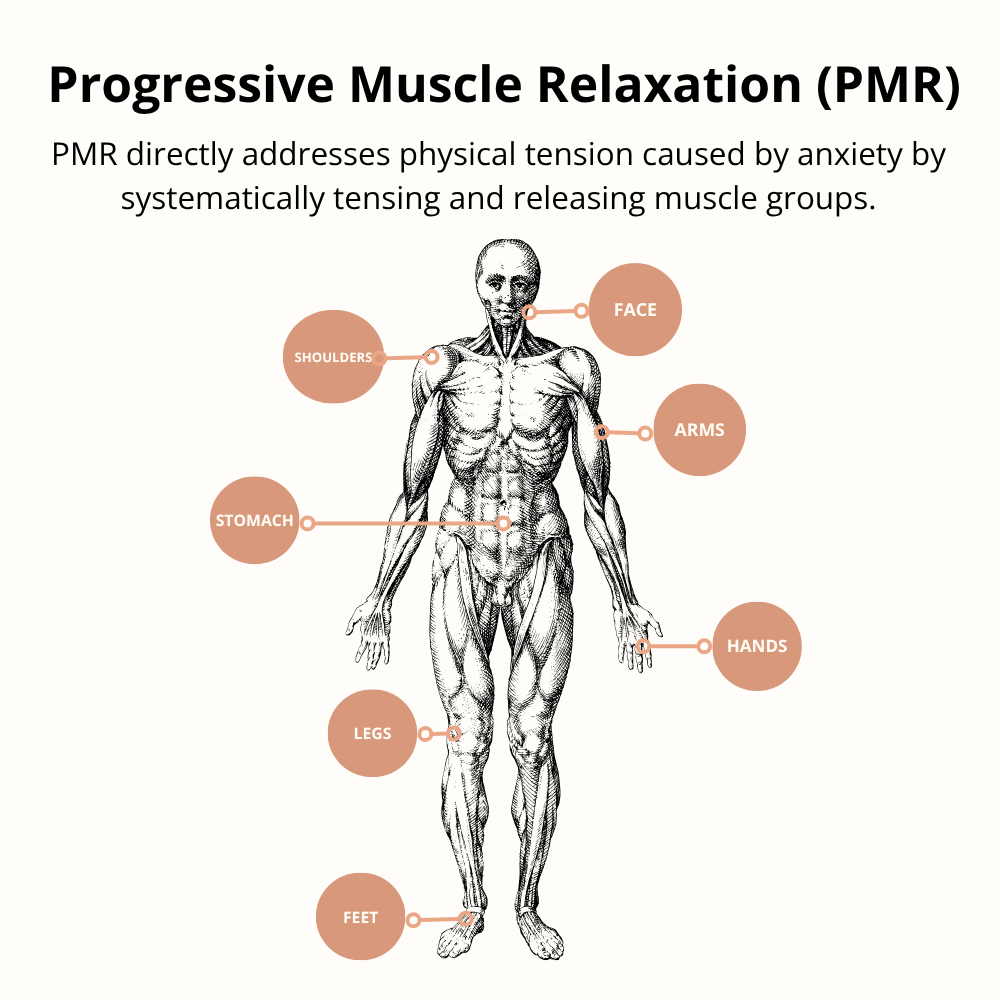
PMR directly addresses physical tension caused by nervousness by systematically tensing and releasing muscle groups. This effective intervention for reducing anxiety (Source: NIH) teaches your body the difference between tension and relaxation.
(Insert image here illustrating the major muscle groups used in Progressive Muscle Relaxation)
For each muscle group, tense tightly for 5 seconds, then release completely for 10-15 seconds:
- Hands: Clench into fists.
- Arms: Tense biceps.
- Face: Scrunch facial muscles.
- Shoulders: Raise towards ears.
- Stomach: Tighten abdominal muscles.
- Legs: Tense thighs and calves.
- Feet: Curl toes downward.
4. Activate Your Body’s “Reset” Button: How to Use Cold Water for Anxiety Relief:
Cold water can provide instant calm during an anxiety attack or panic attack by leveraging the mammalian diving reflex. This reflex:
- Is triggered by submerging your face in cold water.
- Rapidly slows your heart rate.
- Redirects blood flow to core organs.
- Effectively “resets” your nervous system from high alert to calm
Cold Water Technique for Anxious Thoughts
This is how you use cold water to manage anxious thoughts:
- Fill a bowl with cold water (ideally below 50°F or 10°C).
- Hold your breath, lean forward, and submerge your face for 15-30 seconds.
- Alternatively, hold a cold pack or ice cubes on your cheeks and under your eyes.
Note: If you have a heart condition, consult a doctor before trying this technique.
5. Reframe Your Thoughts with Cognitive Reframing
Cognitive reframing, a CBT technique, helps challenge and change negative, irrational thoughts that fuel anxious thoughts. It allows you to examine evidence for thoughts and develop a more balanced perspective, immediately lessening the emotional charge (Source: APA).
A 3-Step Guide to Cognitive Reframing
- Catch It: Identify the specific automatic negative thought.
- Check It: Question the thought. What’s the evidence for/against it?
- Change It: Replace with a more balanced, realistic thought.
Don’t Just Fight Nervousness and Stress. Outsmart It.
Anxiety Attack vs. Panic Attack: Understanding the Difference
While often used interchangeably, “anxiety attack” and “panic attack” have distinctions. Understanding them helps identify what you’re experiencing. “Anxiety attack” is a common term, but “panic attack” is a clinical diagnosis.
| Feature | Anxiety Attack | Panic Attack |
|---|---|---|
| Onset | Often builds gradually in response to a stressor. | Sudden and abrupt, can occur without a trigger. |
| Intensity | Can range from mild to severe. | Intensely fearful, often feels like a crisis. |
| Duration | Can last for an extended period (minutes to hours). | Brief, with symptoms peaking within 10 minutes. |
| Symptoms | Worry, restlessness, fear, physical tension. | Sense of doom, fear of dying, shortness of breath, chest pain, detachment (Source: Mayo Clinic). |
Fact or Fiction: Do You Know the Truth About Anxiety?
Anxiety isn’t a real medical illness.
You should be able to “just get over” anxiety.
“Anxiety attacks” and “panic attacks” are the same thing.
Social stress is just an extreme form of shyness.
You must take medication to treat anxiety.
Anxiety disorders are rare and can’t be treated.
When to Seek Professional Anxiety Help
These techniques offer excellent in-the-moment management but are not a substitute for professional care. Seek help if anxious thoughts consistently interferes with daily life, work, or relationships.
- Therapy: Cognitive Behavioral Therapy (CBT) is highly effective for anxiety disorders (Source: APA).
- Medication: Anxiety medication may be recommended by a psychiatrist as part of a comprehensive treatment plan.
Seeking help is a sign of strength. With support and coping strategies, you can manage anxious thoughts and nervousness and improve your quality of life.
Ready for Your Anti-Anxiety Action Plan?
FAQs: Your Common Questions Answered Here
Catch the negative thought.
Check the evidence for and against it.
Change the thought to one that is more realistic and balanced.